The alarm buzzes before the sun is up. I barely slept last night. He was coughing again, deep, chest-rattling sounds that echo in my mind long after they stop. I lie still for a moment, listening. His breathing is steady now, slow and rhythmic, but I can’t help holding my own breath as I listen. I wait for reassurance that his lungs are working as they should or as well as they can. Once I’m sure, I pull myself out of bed.
The house is quiet, but not in a comforting way. It feels like a precarious balance, the silence ready to tip into chaos at any moment. I shuffle to the kitchen and pull an energy drink out, the first of many. There’s no time for breakfast. My head is already filled with everything I need to do today: emails to send, meetings to attend, events to plan. I’m proud to be working in the cystic fibrosis space helping others who live with the condition he battles every day. It feels like the least I can do is to work harder, faster, and smarter, to make a difference. After all, I’m healthy. I can take it.
I’m running late, again. I’ve learned to move on autopilot, prioritising everyone else’s needs before my own. There’s no time to think about how tired I am or the nagging ache in my throat that never quite goes away. I’ll deal with it later. Right now, there’s work to do.
I pass the bedroom on my way out. I peek inside, trying not to wake him, but he’s already half-awake, propped up on pillows to help him breathe more easily. He smiles at me, a smile that pulls at something deep in my chest.
“I love you, HB,” he explains, “But I love you more, my Andy, ha ha I win” I reply. We reel in our daily battles of who loves the other one most. I’m so in love, and we’ve even entered that part of the relationship where we have nicknames for each other. He’s “my Andy,” and he calls me by my initials, HB. I’m giddy. He nods, and I leave quickly before the urge to cancel my day and stay with him wins.
At the office, it’s a whirlwind. Calls, spreadsheets, meetings, and deadlines blur together. I’m a big team of one, and the community relies on me to keep things moving, and I do, answering questions, solving problems, juggling crises with the practiced ease of someone who hasn’t stopped in years. I’m good at this, but it feels like a relentless treadmill. Every task I complete just adds another to the list. I remind myself why I’m here: for Andy, others like him, and the families who need hope.
But no matter how much I do, it never feels like enough. I push harder, determined to fill every minute. There’s no time to stop, no time to think about how my voice has been hoarse for weeks or how my chest aches with exhaustion. I tell myself I’ll slow down soon, maybe after the next project is finished. Maybe next month. My phone buzzes, “Are you finishing work soon?” Andy asks. I look at the time it’s 7 pm. How did that happen? “I won’t be long,” I lie again, but I’m grateful he has reminded me that the day has ended. Working by myself, I don’t see other people leave the office, and my head is down in a tunnel of work.
My throat feels like it’s on fire. The laryngitis I’ve been ignoring flares up again, leaving me unable to speak above a whisper. Instead of resting, I download an app to type out what I need to say. It’s ridiculous, I know, but I can’t afford to stop. People are counting on me. Andy is counting on me.
When I finally get home, it hits me all over again, the stark reality of what cystic fibrosis does to a person. Andy’s medications are lined up neatly on the counter, row after row of pills, nebulizers, and enzymes.
“How was your day?” he asks.
I shrug and smile, the lie coming easily. “Busy, as always.”
And I unload all the things I’ve done and all the things I’ve learned, typing them into my app because I can’t actually talk, but I want him to know all about it. He shrugs, “I don’t really want to talk about cystic fibrosis at the moment.” Of course, I curse myself. Instead, I switch on the TV and cosy up, he makes a joke, and I laugh; it hurts so much. “Remember how I told you I’d make you laugh every day?” I’m so happy and so sad all at the same time.
My phone buzzes again with a notification, a message from someone in the community asking for advice about navigating the healthcare system. I respond immediately, diving into research, connecting them with resources, and typing out a detailed reply. Helping others feels like the only thing I can control in this chaos, so I throw myself into it completely.
Later, when the house is dark, and Andy is asleep, I sit quietly and feel the weight of the day settle on my shoulders. My body aches in a way that has nothing to do with physical exertion. I know I’m burning out. I’ve known it for months, maybe years. But what choice do I have? Andy doesn’t get to take a break from cystic fibrosis, so how can I take a break from helping him?
I glance at my phone, the screen lighting up with a reminder to book a doctor’s appointment, something I’ve been putting off for weeks. I dismiss it without a second thought. There’s no time for that. My health can wait.
Instead, I creep into the bedroom and sit by Andy’s side. His chest rises and falls with each laboured breath, the sound filling the room. I watch him for a long time, my own breathing unconsciously matching his. I kiss his forehead, and he’s at a normal temperature; maybe I will get some sleep tonight. It’s the only time I let myself stop moving, stop working, stop pretending I’m okay.
And then the alarm buzzes, and another day begins.
I shudder now when I think back to the days when I tried to outwork my emotions. Looking back, I feel deep compassion for that version of myself, a young woman so determined to be everything to everyone that she didn’t realise she was neglecting herself. It’s a painful lesson but an important one: you cannot pour from an empty cup, no matter how much you care or how strong you think you are.
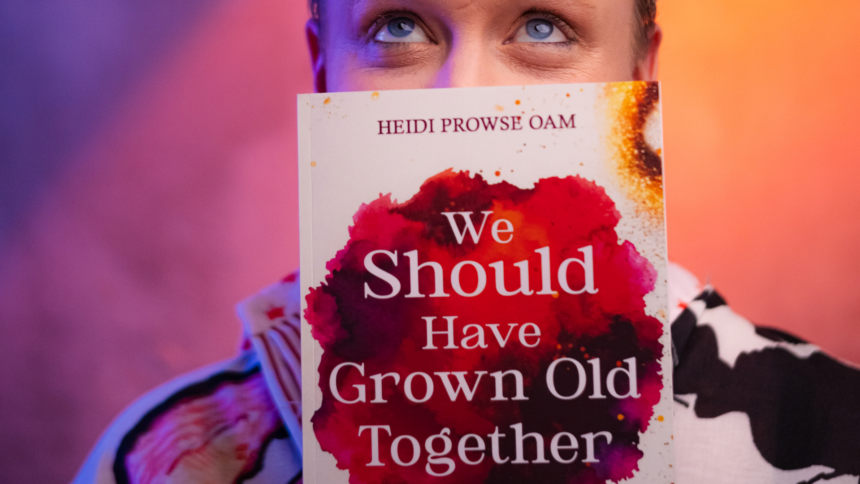
Get your copy of “We Should Have Grown Old Together” here.