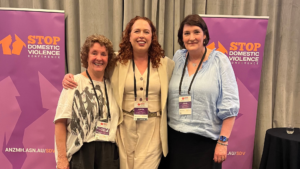

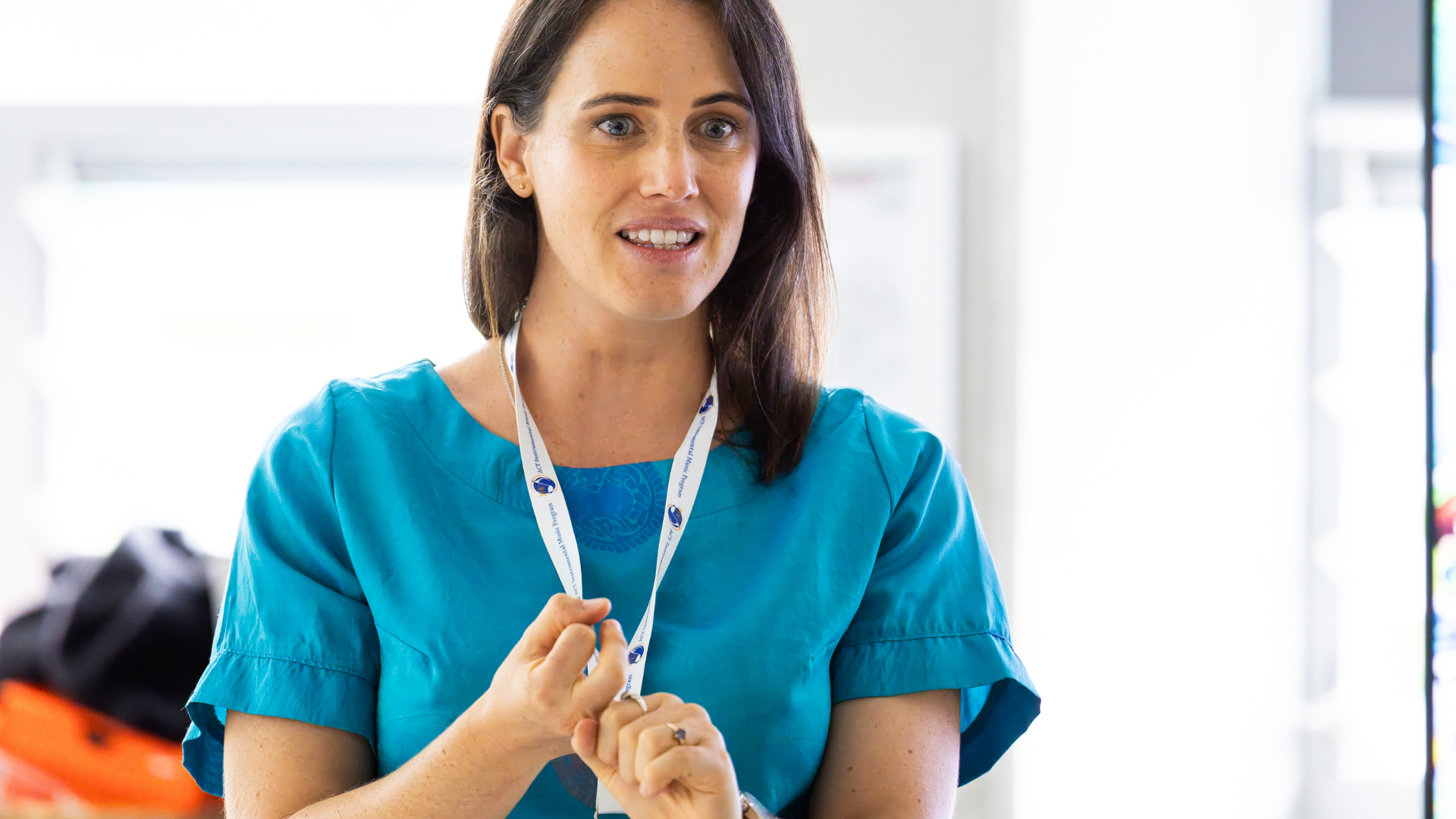

On a flight home, Jenny Dunn sat with a breathing ball on her lap and cried. She had just spoken at a teachers’ conference, sharing ideas for bringing wellbeing into classrooms. The ball was the same one she had used to demonstrate breathing. The tears were happy ones.
Something about that room of teachers had clarified where she wanted to put her energy. Jenny had imagined her work would centre on workshops for young people. Now, she could see another way to reach them: supporting the adults who would teach thousands of children throughout their careers.
“I shared real stories, spoke honestly and allowed myself to be vulnerable,” she recalls. “As a teacher, I knew how hard and exhausting the job could be, but also how deeply rewarding.”
That experience helped shape her focus at Kind Labs, the organisation she founded to support wellbeing through professional development for educators and workshops for students. Jenny describes herself as a seeker of connection and purpose. She loves honest conversations, hearing people’s stories and learning from their wisdom.
At the heart of her work is a conviction about what children deserve to understand about themselves.
“I want every child, in every school, to know and feel that their worth is not determined by their ATAR or the job they eventually have,”
For Jenny, the relationships children build, how they care for themselves and others, and their sense of belonging deserve attention throughout their education. She wants young people to recognise their strengths, understand their values and have opportunities to notice what is happening within them.
She also wants the way we discuss school success to reflect those priorities. If schools are going to be ranked, Jenny wants to know whether children feel safe, valued, connected and supported. She would like their own voices, gathered through regular wellbeing surveys, to help answer that question.
“As a parent, that is the kind of school success I want us to value.”
Her vision asks something of the adults and systems around children, too. She wants wellbeing and learning to be shared priorities, with room to slow down and less pressure on teachers to demonstrate success solely through academic progress.
A recent workshop with a Year 6 class offered Jenny a small, immediate example of what making that room can look like. Students were chatting, calling out and watching one another. Several teachers were observing, and Jenny was nervous herself.
She invited the students to turn their attention inward for five minutes. Together, they practised progressive muscle relaxation, followed by deep breathing with a long, audible outbreath. Jenny joined in.
“We often talk about helping young people regulate, but the way we show up matters, too,” she says. “In that moment, I needed the practice just as much as they did.”
After a few breaths, she felt less nervous. Her voice slowed. When she opened her eyes after the final outbreath, she saw thirty students sitting quietly.
Jenny asked them to place one hand on their chest and one on their belly, then notice how they felt. She offered three questions: How do I feel? How do I know? What do I need?
The conversation that followed explored how noticing feelings and needs could help the students understand their responses to other people. For Jenny, the memory is of a busy room and a nervous teacher finding a little space to slow down together.
She returns often to the part adults play in an interaction: the words they choose, the tone of their voice, the patience they offer and how they listen. In her view, helping someone else starts with paying attention to what we bring into the room. It is a question for parents as well as educators, and one she asks of herself.
That willingness to look inward runs through her own life. Jenny has lived with endometriosis, an autoimmune condition and generalised anxiety. She has also been through cancer, which she says is now cured. For a long time, she found herself waiting to feel completely well before pursuing everything she wanted to do.
“I kept thinking, ‘When I feel better, then I’ll go for it.’”
She is learning to loosen that condition. There may never be one neat ending to her health story, she explains, but she can care for her health while moving towards what matters to her.
“I can feel tired, anxious or low and still have something valuable to offer,” she says. “I can show up while making room for slowness, rest and kindness towards myself.”
This includes stopping when she needs to. Jenny describes learning to listen to her body and set boundaries, including saying no to things she would love to do when they ask more than she can give.
It is a lesson she is still practising. Her account leaves room for days when showing up looks different, and days when rest needs to come first. Meaningful work and care for herself are both part of the life she is trying to build.
That same permission to be human informs how she speaks about teachers. Modelling emotional regulation, in Jenny’s approach, includes noticing feelings, pausing, seeking support and repairing when things go wrong. Teachers can demonstrate those skills without expecting themselves to feel calm all the time.
Kind Labs’ online, self-paced course, The Daily 5 for Wellbeing, brings these ideas into practical classroom activities. It also considers teachers’ wellbeing, including the invisible load they carry and ways to care for themselves during the day.
The course explores five areas.
- MIND Time uses movement, breathing, mindful awareness and reflection to help students check in with themselves.
- Know and Care for Yourself explores emotions, thoughts, strengths and needs.
- Care for Others focuses on empathy, communication and friendship.
- Connect with Nature makes space to learn from the natural world, indoors and outdoors.
- Connect with Creativity uses art, movement, imagination and play to explore ideas and express feelings.
Ready-to-use activity cards help educators bring the practices into everyday classroom life. The intention is to give teachers something they can use as part of a school day, while recognising their own need for care.
The course reflects the realisation Jenny had after that conference: supporting teachers gives her a way to stay connected to her original purpose of helping young people know and care for themselves.
Away from work, she finds comfort in sitting in nature and letting her mind wander, without needing to achieve anything or be somewhere else. It gives her space to slow down and notice the world around her.
She is also quick to puncture any assumption that working in wellbeing makes mornings effortless. Jenny is emphatically not a morning person and admits she can be grumpy. Sometimes, if she wants to exercise early, she sleeps in her gym clothes.
“It’s one less thing to do and one less excuse to stay in bed.”
There is something familiar in that small workaround. Jenny is working out how to care for herself within the life she has, just as she hopes children and teachers will learn to do in their own daily lives.
“We don’t have to feel perfect before we begin,” she says.
Find out more about Kind Labs and The Daily 5 at kindlabs.com.au