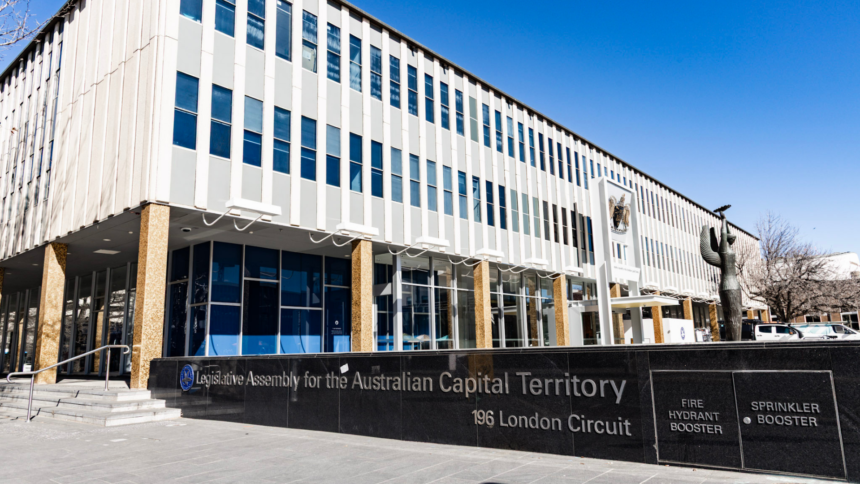
Canberrans elect 25 members to the ACT Legislative Assembly, but those members do very different jobs.
A minister controls portfolios, budgets and departments. An opposition MLA scrutinises government and proposes alternatives. An independent crossbencher can negotiate, seek documents and build support for change, but cannot direct a public service agency.
That makes a simple political league table misleading. Purpose Media Canberra has instead reviewed three members through the same five public-value areas, with the evidence adjusted for the authority each person held:
- listening and representation,
- quality of accountability,
- policy and lawmaking,
- follow-through and public results, and
- integrity and openness.
The review looks a publicly available Assembly records, questions on notice, committee reports, legislation, government data and formal responses for the two years of the current term. (Yes, that means we are half way and another election will come around before we know it). Freedom of information can help obtain records held by ACT agencies, although much of the parliamentary material is already public. A non-ministerial electorate office is not generally an ACT government agency for FOI purposes, so private casework totals and office response times usually cannot be independently checked.
These report cards reflect the public information available to us and remain open to correction if new, verifiable evidence is provided. But more importantly, they start a conversation and we want to know what you think?
The report cards at a glance
| Member | Listening | Accountability | Policy | Results | Integrity |
| Peter Cain | B− | B+ | C+ | D+ | C+ |
| Rachel Stephen-Smith | B− | C+ | B | C | B− |
| Fiona Carrick | B+ | B+ | A− | B+ | B− |
Peter Cain and the value beyond question totals
Peter Cain, Liberal MLA for Ginninderra, has been the Assembly’s most frequent user of written questions on notice. A Canberra Times analysis counted 277 entries in less than two years, representing 21.8 per cent of the questions submitted at that point. His questions covered health, disability, housing, education, planning, emergency services, sport and the public service.
That volume matters because questions on notice can require a minister to explain spending, waiting times, delays or the operation of a service in writing. However, one database entry can contain several subquestions, and the total does not show whether each answer was complete or whether Cain pursued the issue afterwards.
His B+ for accountability recognises sustained scrutiny without treating every question as equal evidence of public benefit.
Cain also brought community concerns into the Assembly through work concerning Hawker Tennis Centre, SDN Bluebell childcare, police presence and programs for seniors at CIT Bruce. His policy grade recognises motions, committee work and a successful June 2026 amendment seeking an implementation roadmap and regular reporting on foundational disability supports and Thriving Kids.
His lowest grade, D+ for follow-through and results, requires careful interpretation. It does not establish that his office failed to follow up. It records that the public evidence often stopped at the question, petition or debate, making it difficult to see whether a decision changed or a service improved. A public tracker linking questions to answers and later action would make the value of his unusually large scrutiny program easier for residents to judge.
Rachel Stephen Smith and the higher test for ministers
Rachel Stephen-Smith’s card uses a different test because ministers have executive authority. For most of the review period she held Health, Mental Health, Finance and the Public Service. She became Deputy Chief Minister and moved to Education and Child Development on 30 July 2026. Those new portfolios had been held for a short period of the half term, so they were treated as a transition baseline rather than evidence of completed delivery.
Elective surgery provides the clearest measurable improvement from her former health responsibilities. Canberra’s public system completed 17,569 procedures in 2025–26 and reduced the number of patients waiting beyond the clinically recommended time by 37 per cent. The progress was substantial, but 1,274 patients remained overdue when the portfolio changed hands.
Other indicators were more difficult. Emergency-department access remained well below government targets, while governance reform and major projects were unfinished. Questions also continued about the reliability and interpretation of health-system data. An independent inquiry was established and later produced 49 recommendations, but the government response and implementation sat beyond the review period. An inquiry is evidence that a problem was formally acknowledged; it is not evidence that the problem has been resolved.
Her B for policy and stewardship recognises investment, safety work and management of several demanding portfolios. The C+ for accountability and C for results reflect missed targets, fiscal pressure and incomplete reforms. Spending and announcements were only credited when the record showed a delivered service, milestone or measurable change.
Fiona Carrick and influence from the crossbench
Independent MLA Fiona Carrick cannot direct ministers or agencies, so her card looks for evidence that advocacy produced a formal decision, protection, reporting deadline or changed government position. Her strongest record is in local planning and community infrastructure, supported by committee scrutiny of public finances and planning decisions.
Coombs Peninsula is the clearest planning example. Carrick moved to remove the peninsula from the land-release program and rezone it consistently with the Molonglo River corridor. A subsequent Territory Plan amendment removed the future urban area overlay and strengthened protection. Residents, environmental advocates and other representatives had pursued the issue for years, so the result is shared. Carrick’s contribution was carrying that community campaign into a traceable Assembly and planning process.
Burrangiri Aged Care Respite Centre offers a second practical result. After the proposed closure caused concern among families and carers, Carrick and then-Liberal MLA Leanne Castley sought more time and information. In May 2025, the ACT Government committed support for the Salvation Army’s 15-bed centre to continue for another two years. The reprieve protected immediate respite access, although the longer-term need for capacity remained unresolved.
Carrick also secured Assembly support for work concerning Woden Town Centre, a future southern bus network, Yarralumla Creek and dog park options. These motions often included a report or deadline, which creates a public point for follow-up. Her A− for policy reflects that specificity. The B+ for results recognises completed protections and commitments while allowing for reports and working groups that had not yet produced a visible change by our mid-term cut off.
What the grades can and cannot tell us
These cards are not declarations about who is the best politician. They show how strongly the available evidence met the same five criteria after allowing for each member’s role. A low result grade can mean that work is unfinished or not publicly documented; it does not prove that no work occurred. Likewise, a passed motion or published report should not be confused with a completed improvement.
The three cards also show why attribution matters. Coombs Peninsula and Burrangiri involved communities, advocates, several politicians and government decision-makers. Elective-surgery improvement involved clinicians, administrators and patients as well as the minister. Cain’s petitions relied on residents who raised the issues. The review credits a member’s contribution without assigning them ownership of a collective result.
Now the question goes to Canberra voters. Are these the right five things to measure?
Which questions uncovered information that mattered to you? Which motions led to a change you could see? What should each member complete before the end of the term? Specific examples, including positive experiences and unresolved concerns, will help test these provisional grades against everyday community experience.