
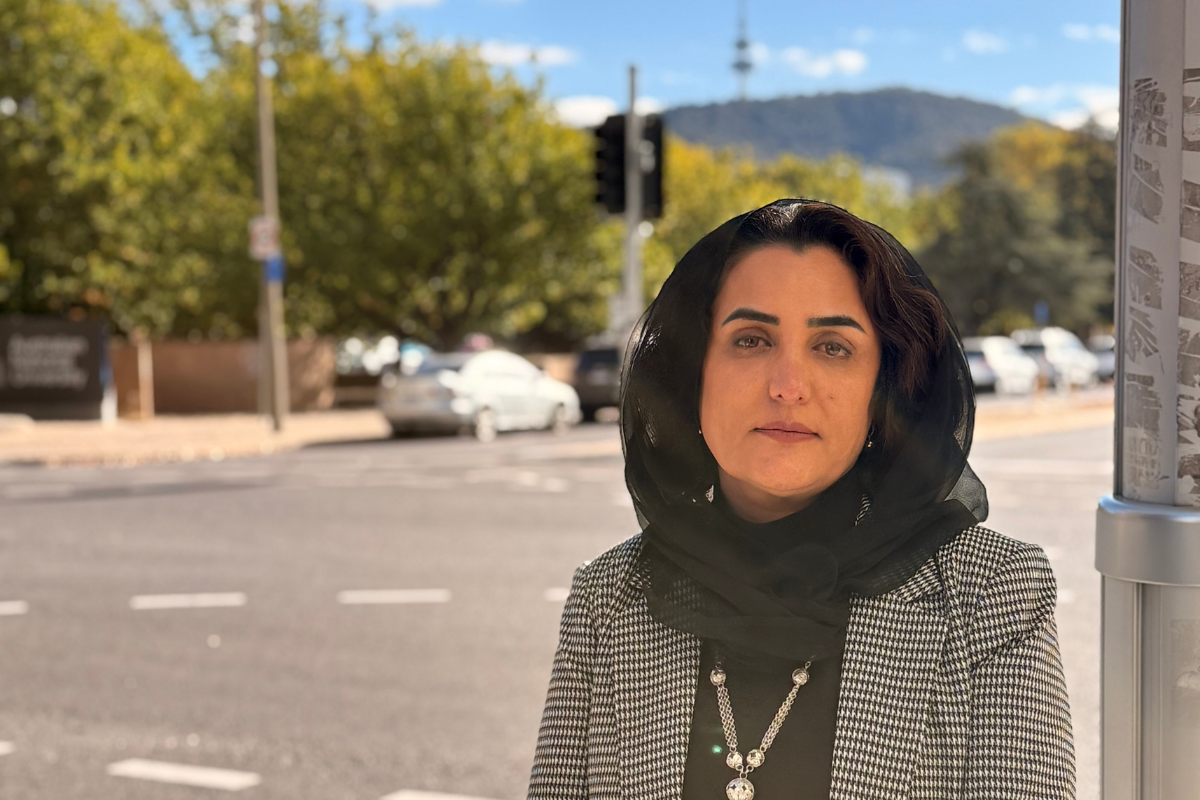

For Nilofar Ebrahimi, education has never been only about delivering information. It is a way to help someone feel less alone. It is a way to make a complicated system feel understandable. It is a way for women who have carried change, loss and uncertainty to begin asking questions, making decisions and finding their confidence again.
That belief now sits at the centre of her work in Canberra.
Originally from Afghanistan, Nilofar came to Australia in 2022 after leaving her home country the year before. Before arriving here, she had worked as a medical doctor and had a background in public service. Starting again in a new country meant rebuilding many parts of life at once: family, work, language, community and a sense of belonging.
In Canberra, Nilofar also found people who were ready to stand beside her. With the support of generous local people, she started the Zam Zam Foundation in 2022. The organisation began with a clear purpose: to support education, independence and connection for women and girls whose opportunities have been interrupted by hardship.
Through Zam Zam, Nilofar supports orphaned girls and girls from single-parent families in Afghanistan to continue their education, including study beyond year six. Yes, you read that correctly. Year six!
In the ACT, the foundation also supports refugee women to become more independent through practical initiatives such as driving classes, swimming classes, mental health sessions and health information sessions. It is work that spans countries, but the purpose is consistent: helping women and girls access the knowledge, confidence and support they need to move forward.
Since the end of 2023, Nilofar has also worked in health promotion with Sexual Health and Family Planning ACT, focusing on refugee and migrant communities. In this role, she helps connect people with health information in ways that feel safe, respectful and relevant to their lives.
Her work often begins in community spaces. Rather than expecting people to come forward on their own, Nilofar visits community organisations and centres, meeting women where trust already exists. Sessions are tailored to the group in front of her. One group may need information about menopause. Another may need support to understand cervical screening, puberty, healthy relationships, consent, online safety or sexual health.
For some participants, these topics are new. For others, they may be familiar but difficult to talk about. Either way, Nilofar understands that information alone is not enough. The way it is shared matters.
Many migrant and refugee families face barriers that are easy to underestimate from the outside. Language can make services feel distant. Isolation can make a simple question feel too big to ask. A lack of information can leave people unsure where to begin. Fear of being judged can keep concerns hidden for longer than they need to be.
Nilofar’s response is to create a warm, welcoming environment where questions are respected and confidentiality is clear. She knows participation grows when people feel safe, when they are not judged, and when the person delivering the session understands the importance of trust.
Mother-language education is a key part of that. Nilofar has translated organisational resources into Farsi so women can take information home and read it again in their own time. That matters because a first session can be overwhelming, especially when the topic is personal or when someone is hearing certain health information for the first time as an adult.
Take-home resources give people space. They allow women to revisit the information privately, talk with family if they choose, and return with questions later. They also recognise that learning is not always instant. Sometimes confidence builds slowly, through repeated contact with a trusted person and a service that keeps showing up.
This is where Nilofar’s lived experience shapes her approach. She knows that community education is not a one-off presentation. It is outreach, advocacy and relationship-building. It is connecting people with services and helping services better understand the people they want to support.
“For me, education is not only about sharing information,” she says. “I believe education can rebuild connections, awareness, hope and, in people who have experienced trauma and war.” Nilofar shared.
That idea runs through all of her work.
The impact is visible in small but important shifts. Women begin attending sessions more confidently. Community members ask for new topics. Conversations that may once have felt too hard start to become possible. Over time, requests have also emerged for sessions involving men and husbands, particularly around healthy relationships and consent.
“Seeing women become stronger, learn new skills, and support each other gives me, hope, a lot of hope, and happiness.”
Because for Nilofar, that is a sign of trust.
It shows that community education can grow when it is delivered with patience, respect and consistency. It also shows the importance of adapting the approach. In sessions for older audiences, she uses discussion, lived examples and relational trust rather than simply presenting information and leaving. She is also exploring ways to involve male team members so men who may not previously have attended feel more comfortable participating.
Nilofar wants Canberrans to see the Afghan community not through a single story of hardship, but as diverse, resilient and hardworking. Many people have arrived after loss and displacement, but they also arrive with skills, hopes and a desire to contribute. Her own life reflects that. She brings together medical knowledge, community leadership, media experience and a deep commitment to helping people navigate systems that can otherwise feel unfamiliar.
One moment captures that commitment clearly. On the same day as her own citizenship ceremony, Nilofar helped emcee, reading 108 names despite her own concerns about speaking English publicly. It was a powerful image of belonging in motion: someone becoming a citizen while also helping others mark the same milestone.
Her experience of learning about Australia’s laws and civic systems also shaped her message for other migrants and refugees. She believes people need support to understand not only services, but the rights, responsibilities and everyday systems that shape life here. When those systems become clearer, people can participate with more confidence.
That is the practical heart of Nilofar’s purpose. She is not only helping people access information. She is helping them feel that the information belongs to them.
“For me, this work means responsibility, trust, and hope.”
Nilofar Ebrahimi
For Purpose Media Canberra, this is exactly the kind of local story that matters. It is a reminder that community connection often begins with one person willing to listen closely, explain gently and keep returning until trust has time to grow.