Part 1: Death & Meaningful Goodbyes
Why Meaningful Goodbyes Matter More Than We Realise
Most of us don’t talk about death until we are forced to. And when someone we love dies, we enter one of the most vulnerable, disorienting moments of our lives, one where decisions need to be made before our brain has even caught up with what has happened.
In that moment, many Canberrans discover something that should be simple but has never been explained to them: you are allowed to spend time with your person after they die.
Not rushed. Not clinical. Not hidden away behind closed doors. Real time. Gentle time. Human time.
At Tender Funerals Canberra, this truth sits at the centre of their model. Because the time you spend with your person, whether it is an hour, a day, or several days, can be one of the most powerful ways to begin understanding the reality of your loss.
It is also one of the most meaningful acts of love you can offer.
Why spending time matters
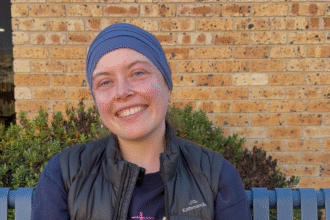
As Tender Funerals General Manager Catherine Prosser, explains to every family, your brain has to be gently retrained to understand that the person you love has died. This is not a cold psychological concept, it is a deeply human one.
“Basically making new memories. Your brain has gotta be retrained to go, ‘This person isn’t here.’”
When you sit beside someone who has died, touch their hand, adjust their clothing, brush their hair, or simply breathe in the same room… you are creating the first memories of a life without them. Not memories you want, but memories that help the mind begin to understand a new reality.
And this is where so much of the healing begins.
“For a lot of our families, most of the benefit they get from being through this process with us is before the funeral.”
The funeral itself is often for the wider community.
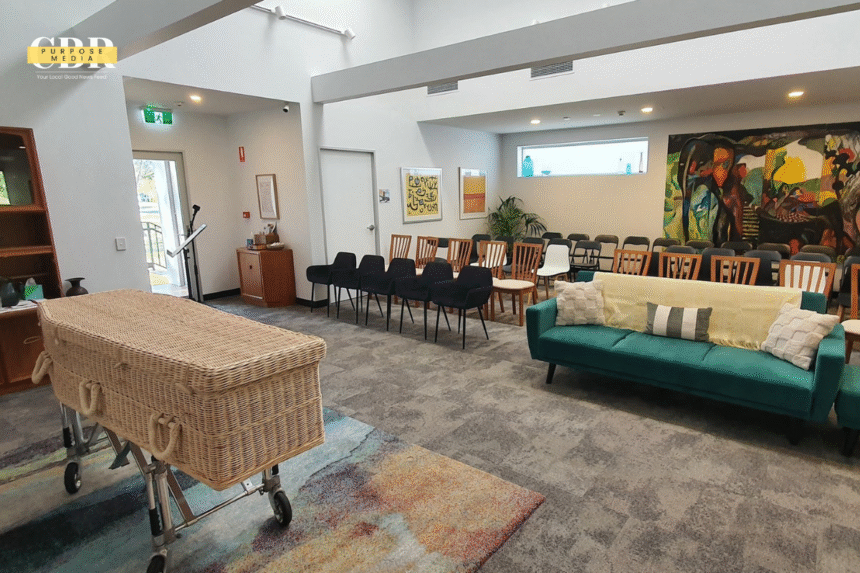
But the time, the quiet, unhurried, deeply personal time, is where families cry, laugh, tell stories, sit in silence, decorate a coffin, wash someone’s hair, or simply hold hands one last time.
It is also where acceptance slowly begins to settle into the body.
Choice, not choreography
One of the most common misconceptions about death is the belief that you “must” follow a standard sequence: a brief viewing, a scheduled service, a burial or cremation, then home.
Tender dismantles that myth immediately.
“You are not required to do anything.”
Except for basic legal requirements surrounding buriel, everything else is optional.
You can:
- have a service
- skip the service
- spend time with your person
- bring food and share a picnic
- decorate the coffin
- wash and dress them
- or simply sit quietly
Nothing is mandatory.
Commercial funeral homes often present package options, and many families assume these are requirements. Tender’s approach is the opposite, bespoke, not packaged. Every choice is optional, every element is explained, and all decisions are made at the family’s pace.
This freedom gives families permission to ask themselves,
“What do we need?” not, “What is usually done?”
The middle-ground option most people never knew existed
Traditionally, funeral homes offered two extremes:
- A full service, often expensive and heavily structured
- A direct cremation, with no time spent with the deceased
Tender introduced a compassionate middle option:
“We kind of have this thing in the middle… You don’t have to have a service, but if you want to just spend some time with your person… you can do that.”
About 30% of families choose this. Others combine elements, spending time with their person and holding a service later. More than half of Tender’s families spend time with their person in some way.
This is far higher than traditional funeral homes across Australia, and it speaks to something Tender has observed again and again: given the choice, families want connection. They want time. They want meaning.
What spending time can look like
One of the most powerful aspects of Tender’s model is how normal and humane the experience is.
Families can:
Sit with their person
Comfort grows when people are not rushed. Some come every day for an hour leading up to the funeral.
Share food and everyday rituals
Tender encourages families to bring “the cheese and biscuits or their last bottle of whiskey.” These simple, familiar acts help people feel grounded in an unfamiliar moment.
Decorate the coffin
Some paint it. Others collage photographs, flowers or letters. A family once pre-decorated a coffin for an 80th birthday party activity, not because death was near, but because they wanted to celebrate life openly.
Use wash-and-dress rooms
Tender is the only funeral home in Canberra with purpose-built wash and dress rooms.
Families can wash their loved one fully, brush hair, apply makeup, or simply straighten clothing, if they want to. For many, this private, tender care becomes a ritual of love.
Bring personal objects
Some bring music, blankets, artwork, knitted items or handwritten notes.
Volunteers often place gum leaves with the person, a small gesture that eases the minds of families who worry about whether their person is being cared for when they are not in the room.
Keep their person at home
With cooling plates (used safely up to five days), people can bring their person home from the hospital or hospice. They can place them in their bed or a favourite room and allow family, friends and neighbours to visit quietly.
“They don’t have to be in their coffin… They could just come and be in their bed or in the front room.”
This option is especially important for cultural communities with strong traditions around caring for someone after death.
Why so few people know these options exist
The biggest barrier is simple: We don’t talk about death.
“Because we don’t talk about death, we don’t talk about funerals… which means we don’t talk about the psychology of that immediate loss.”
Without conversation, families arrive at a funeral home unsure of what is normal, what is allowed, or what to ask for. Many feel pressured into services they don’t want or can’t afford. Some believe embalming is mandatory. Others think they have to rush because hospitals or facilities push for quick decisions.
Tender challenges this gently:
- If someone dies in hospital, there is rarely urgency.
- Most cultural rituals are allowed, despite common misconceptions.
- You can see your person regardless of their condition, Tender will support you through it.
- Spending time is not only permissible, but beneficial.
The more people know their rights and options, the more empowered their grief becomes.
So who is Tender Funerals? They are a not-for-profit, and this shapes everything.
- All services are provided at cost.
- $250 from every funeral goes into the Pay It Forward fund to support families in financial hardship.
- Volunteers play a substantial role, from mortuary support to maintaining spaces to creating mementos.
- Affordable options like shroud cremations and bearer trays are offered at realistic prices.
This community-driven approach creates space for families to choose what matters most, not what they can afford under pressure.
Why meaningful goodbyes change the grief journey
Spending time with your person doesn’t remove grief. It doesn’t soften the pain of losing someone you love. But it does give grief a place to go.
It anchors you.
It steadies the moment.
It helps the brain, the heart and the body begin to understand the next chapter.
When families look back months or years later, the moments they remember with gentleness are rarely the ceremony itself. It is the hour brushing Mum’s hair. The moment of placing flowers on Dad’s chest. The final song played in the van. The stillness of sitting hand-in-hand in a quiet room. The laughter at stories told over cheese, biscuits and memories.
These small, human acts create meaning where there is shock. Compassion where there is overwhelm. Love where there is loss.
And often, for the first time in the whole experience, families feel they can breathe.
What’s next in this series?
Over the next few weeks, we’ll explore more “But I Didn’t Know…” moments talking about a topic we don’t talk about enough… death. If you have questions get in touch. Every article will be grounded in real information, straight from Tender’s lived practice and community experience.
Because when it comes to death, choice is not the luxury, it is the right.
And meaningful goodbyes are something every family deserves.