Rewriting the Future, One Story at a Time
There is a quiet revolution happening in how we understand science. It is not being led from behind laboratory doors or locked inside academic journals. It is being shaped by storytellers. By people who believe that knowledge should feel human, hopeful, and within reach.
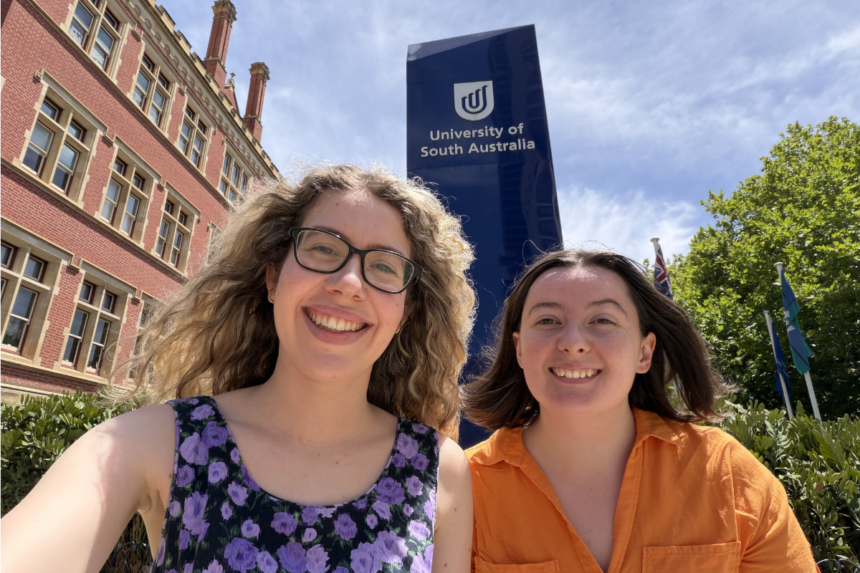
For Isabel Richards and Ella McCarthy, co-founders of Sci_Burst, that belief is not just an idea. It is their purpose.
At a time when misinformation spreads faster than facts and dystopian narratives dominate our feeds, they are doing something quietly radical. They are choosing hope. And they are inviting others to do the same.
Science, but make it human
Spend even a few minutes listening to Isabel and Ella, and one thing becomes immediately clear: they are not trying to make science “cool” in a superficial way. They are trying to make it belong.
“We both care deeply about inspiring and building hopeful, sustainable futures,” Isabel shares. “There’s so much negativity and dystopian thinking that dominates today’s popular culture, and with Sci_Burst we’re actively trying to help people break out of that toxic media cycle and stay defiantly hopeful about the future.”
That word, defiantly, matters.
Because this is not passive optimism. It is a conscious choice to centre possibility over fear.
Their current podcast season explores solarpunk, a vision of the future where humanity, technology, and the environment coexist in harmony. It is a stark contrast to the apocalyptic narratives many people have come to expect.
“That version of our future is possible and it’s not talked about enough,” Isabel says.
Ella builds on this, grounding their work in a simple but powerful principle: accessibility.
“We also deeply believe that science and expert information is there to serve and inform people, that it shouldn’t stay locked up behind paywalls or written in inaccessible language. Science is for everyone! Science, Technology, Engineering and Mathematics all add to our understanding of the world, and everyone should benefit from this.”
It is a philosophy that challenges the traditional boundaries of expertise. And it is resonating.
The impact you don’t always see
For many organisations, impact is measured in numbers. Reach, clicks, downloads. But for Isabel and Ella, the most meaningful moments are often quieter, more personal.
“I’m proud of many things we’ve achieved together as Sci_Burst. My proudest so far is the impact we’ve had on girls and non-binary people,” Isabel reflects.
Through workshops with high school students, they are not just teaching science communication. They are shaping confidence, voice, and identity.
“To give you a specific example: We’ve been running a series of science communication and science storytelling workshops for high school students over the last couple months. After one of these workshops, one girl sent us this lovely message about how much our session inspired her and how she was going to implement what she’d learnt for an upcoming presentation… and a leading drama performance! To know that we’ve left a positive mark on a teenage girl’s life, even if it’s just one, means everything to me and makes it all worth it.”
There is something deeply personal in the way Isabel speaks about this.
“I see so much of my teenage self in these girls and hearing their stories feels like I’m healing my inner girl. Sci_Burst is exactly what I would’ve wanted at their age and I’m honoured we can be that guiding light for them.”
Ella echoes this sense of connection, but from a different angle. The audience they have built is not just listening, they are investing time, energy, and trust.
“People have spent hundreds of hours listening to our podcast, it’s very humbling. Our journey with Sci_Burst has also brought me to the most uplifting compliment ever, where a listener said they wanted their daughters to grow up to be just like me. How do you emotionally recover from such beautiful words?”
It is the kind of feedback that cannot be manufactured. It can only be earned.
The invisible work of making knowledge visible
Despite the clear impact of their work, Isabel and Ella are navigating a challenge that many in the sector will recognise. Science communication, while essential, is often undervalued.
“The World Economic Forum just listed misinformation and disinformation as a top five global risk over the next ten years,” Isabel explains. “Science communication is crucial to combatting this… Yet we’re still having to justify the importance of our work.”
This tension is not unique to Sci_Burst, but it is deeply felt.
“It can be really hard to get funding and backers because the pay off is not immediately obvious or the work is, surprisingly, not seen as valuable.”
At the same time, the platforms that once supported science storytelling are shrinking.
“Australian science media is on the decline with major titles like CSIRO’s Cosmos, Double Helix, and Scope TV disappearing due to lack of support.”
It raises an important question. If we do not invest in how knowledge is shared, what happens to who can access it?
Ella pushes this further, challenging not just how knowledge is communicated, but whose knowledge is recognised in the first place.
“I wish more people understood how valuable traditional knowledges, embodied learning, and personal experiences are not only for STEM but also in general.”
She highlights a deeper systemic issue.
“Right now there are problems with who is acknowledged as an expert, who gets to ‘create knowledge’, and whose voice gets heard. These groups of ‘expertise’ are too small and not as inclusive as they should be.”
Sci_Burst sits in that in-between space. Bridging academic knowledge with lived experience. Translating without diluting. Expanding without excluding.
“We’re still learning a lot ourselves, and learning is a beautiful thing.”
When purpose is born from pain
Behind every purpose-driven project, there is often a moment of decision. A point where continuing on the same path no longer feels right.
For Isabel, that moment came through a deeply personal period of challenge.
“I went through a really rough period myself recently, my ‘quarter-life crisis’, and am still in the middle of my healing journey. It was a combination of career heartbreak and chronic disease diagnosis.”
It is the kind of experience that could easily lead to stepping back. Instead, it became a turning point.
“BUT if I didn’t go through all that, I wouldn’t have made the decision to pivot and go full-time on Sci_Burst.”
That decision has shaped everything that followed.
“And I’m really proud of what Ella and I have turned it into over the last few months because of that pivot.”
Her reflection is both honest and hopeful.
“Life can be rough, but the pain is temporary and good times will come again. Think of it as a major growth period and an opportunity to realign yourself with your true values and purpose. To quote Taylor Swift’s ‘Opalite’, you have to make your own sunshine.”
Ella approaches decision-making from a different, but equally grounded perspective.
“There is no ‘right’ choice, but when you do make a choice it will be the right one for you.”
It is a mindset that removes the paralysis of perfection.
“For me this phrase reminds me to back myself, that I know the choices, my values, and associated risks well.”
And at the heart of it all, both emphasise something often overlooked in conversations about success: community.
“Another piece of advice we both agree on is to build and sustain beautiful friendships. Ask your friends for help when you need it, support your friends, and build your community! There’s nothing better than seeing your friends succeed (trust us, we’d know)!”
The people behind the purpose
Part of what makes Isabel and Ella’s work resonate is that they are unapologetically themselves.
Isabel describes herself as a “Bookworm, gamer girl, and hardcore Swiftie,” someone “all about adding more whimsy to life and embracing the chaos of my mid-twenties.”
She finds joy in reading, video games, crossword puzzles, and pub trivia. And, in a detail that feels very on brand, admits:
“I can’t go a night without eating ice cream. I have a mental breakdown if I skip dessert. It’s a problem.”
There is also a surprising twist.
“I’m also very morbidly curious and love horror media.”
Ella, on the other hand, brings a different energy. Structured, curious, and deeply engaged.
“I’m an all-in kind of person, I love projects, plans, and systems that are all-encompassing.”
When she switches off, she leans into physical, creative outlets.
“I love baking, arts & crafts, and walking outside (which never fails to clear my mind)!”
And in a line that perfectly captures her personality:
“My favourite temperature is 32 degrees Celsius… 40 degrees feels like a hug from the world.”
Together, they are a balance of creativity and structure. Whimsy and systems. Curiosity and care.
Why this matters
In a city like Canberra, where policy, research, and expertise intersect every day, the work of people like Isabel and Ella plays a critical role.
They are not just communicating science. They are reshaping who feels included in it.
They are reminding us that knowledge is not just something to be consumed. It is something to be shared, questioned, and lived. And perhaps most importantly, they are showing that hope is not naive. It is necessary.
Because if we cannot imagine a better future, how can we build one?
As Isabel puts it:
“Despite what our social media algorithms might tell us, there’s an abundance of kindness and people out there making the world a better place everyday. And if we don’t talk about those good things… how will we ever achieve that radically utopian and just future so many of us long for?”
That is the work of Sci_Burst.
Not just telling stories about science.
But telling stories that help people believe in what is possible.
People with Purpose is part of Purpose Media CBR’s commitment to amplifying the people shaping a more connected, informed, and hopeful Canberra. Have a story to share? We would love to hear from you. Get in touch